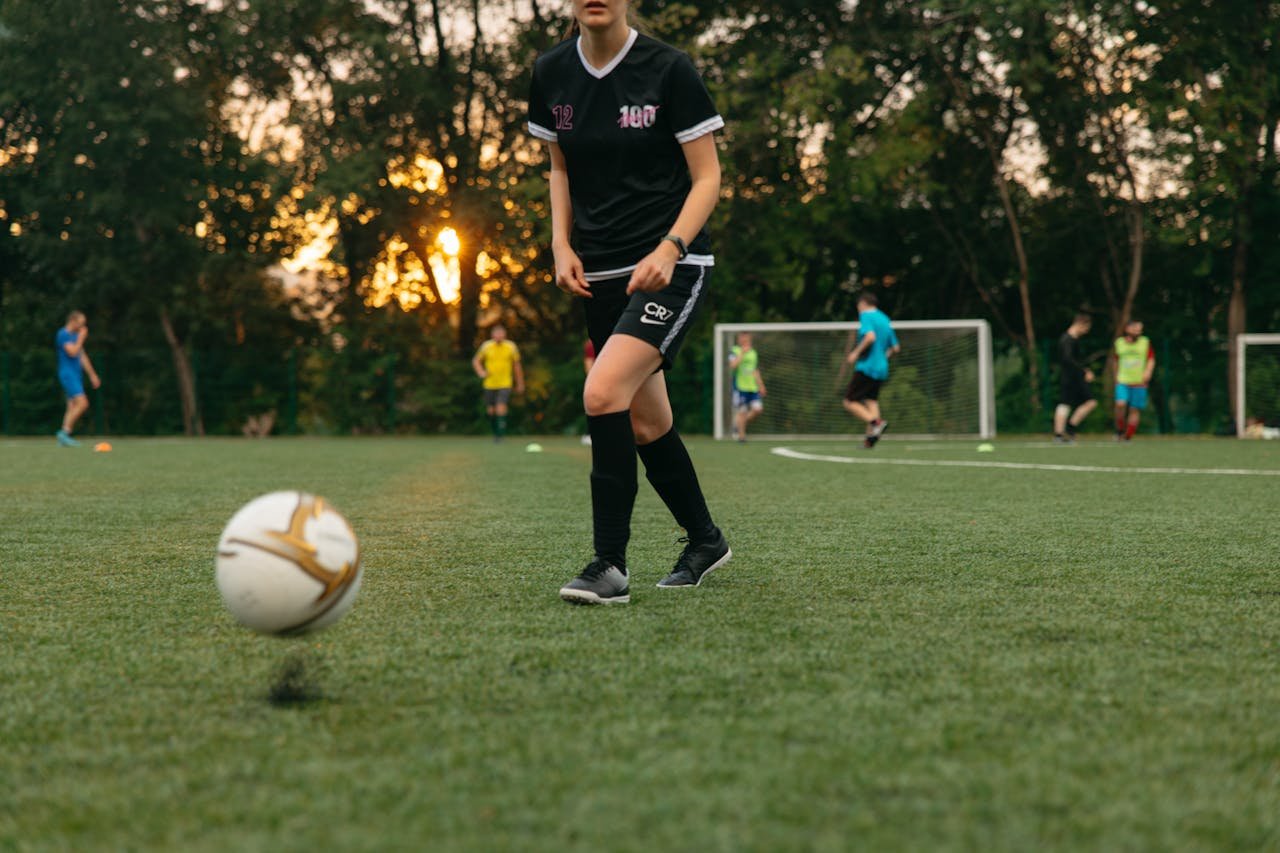

Passing accuracy is a foundational skill in soccer, determining how well a team controls the game. Poor passing disrupts rhythm, creates turnovers, and reduces scoring chances. Improving accuracy isn’t just about technique; it’s about vision, timing, and decision-making. Even 15 minutes a day focused on targeted drills can make a noticeable difference in a player’s performance.
Many players spend hours on general practice but neglect precision work. By intentionally training to pass with control and intention, players develop muscle memory that translates directly into match situations. Accuracy builds confidence, allowing players to take risks knowing they can execute passes reliably.
Helpful Hint:
Start each session by setting a clear goal for passing accuracy. Focus on hitting targets consistently rather than just kicking the ball around.
Core Elements of Accurate Passing
Accurate passing requires several key elements: body positioning, foot technique, weight of pass, and awareness of teammates. Without coordinating these factors, even the most skilled player can misfire. Pay attention to how your body aligns with the ball and your intended target. Proper posture and balance are critical for precision.
The choice of passing surface—inside foot, outside foot, or instep—affects both speed and accuracy. Beginners often overlook passing weight, sending balls too hard or too soft. Training consistently on these fundamentals ensures every pass is deliberate and controlled.
Solo Passing Drills for Daily Practice
Working solo allows players to focus entirely on technique without pressure from defenders. These exercises are simple, take only 15 minutes, and target both short and long-range accuracy.
Wall Pass Drill
Find a wall and mark a target area. Pass the ball against the wall and receive it cleanly, aiming to hit the same spot consistently. Adjust distance and force gradually.
Target Circles Drill
Set up cones or small goals at various distances. Try to pass the ball into each target consecutively. Focus on using both feet and controlling the ball’s pace. Track your hits to measure progress over time.
Moving Ball Control Drill
Kick the ball to yourself at varying angles. Practice receiving and returning the pass accurately. This drill improves reaction time, touch, and spatial awareness.
Stats:
Studies show that focused passing drills, even for 15 minutes a day, can increase passing completion rate by up to 20% over four weeks. Source: Soccer Science Journal, 2022.
Team Passing Drills to Boost Accuracy
Passing is often practiced in isolation, but team drills mimic match conditions, improving decision-making and timing.
Triangle Passing Drill
Form a triangle with two teammates. Pass the ball around the triangle while maintaining accuracy and proper weight. Add movement to increase difficulty and simulate match scenarios.
Rondo Circles
Set up a circle with 4-6 players surrounding 1-2 defenders. Keep the ball moving, completing accurate passes under pressure. Rondos train quick thinking and precise execution under defensive pressure.
Quick One-Touch Drill
Line up players 5-10 meters apart. Pass with one touch, aiming to maintain rhythm and accuracy. Gradually increase speed and decrease distance to challenge reflexes and precision.
Helpful Hint:
When doing team drills, focus on communication. Calling out passes and targets improves coordination and reduces errors, reinforcing passing accuracy naturally.
Common Passing Mistakes and How to Fix Them
Even experienced players make avoidable errors. Recognizing and correcting these mistakes can dramatically improve passing accuracy.
- Not watching the target: Always glance at your teammate and anticipate their movement.
- Overhitting passes: Adjust force to ensure the ball is playable.
- Poor body alignment: Keep hips square and weight balanced for control.
- Using only the dominant foot: Practice both feet to become unpredictable and versatile.
- Ignoring follow-through: Proper follow-through guides the ball and improves consistency.
Integrating Accuracy Practice Into Daily Routine
Consistency is key. Dedicate at least 15 minutes daily to passing exercises. Short, focused sessions often yield better results than sporadic, longer practices. Begin with solo drills to hone technique, then transition to team drills to simulate game conditions.
Over time, tracking progress and varying drills keeps practice engaging and ensures improvement. Combining technique, vision, and decision-making makes a player more effective and confident in matches.
Helpful Hint:
Use a journal or video recording to track passing accuracy over weeks. Small improvements compound, and seeing measurable progress motivates continued practice.
Advanced Solo Passing Drills
Once basic drills feel comfortable, adding complexity can further improve accuracy. Advanced solo drills challenge timing, control, and precision under varied conditions.
Wall with Target Zones
Mark multiple zones on a wall. Pass the ball aiming for a specific zone each time. Alternate between inside and outside foot passes. Increase distance gradually to improve long-range accuracy.
Obstacle Passing Drill
Set up cones or small objects to navigate the ball around before hitting a target. This simulates defenders in a match and forces players to control angles and pace precisely.
Dynamic Passing with Movement
Move continuously in a small area, passing the ball against the wall at varying angles. Focus on balance and timing while hitting targets consistently. This trains foot-eye coordination under realistic movement conditions.
Stats:
According to a 2021 UEFA Technical Report, players practicing dynamic solo passing drills showed a 15% improvement in passing accuracy during competitive matches.
Advanced Team Drills to Boost Precision
Team-based drills reinforce not just technique but decision-making under pressure, helping players anticipate teammates’ movement and optimize passing choices.
Four-Corner Passing
Set up four cones in a square. Pass around the square quickly with teammates, adding one or two defenders to increase pressure. Focus on clean, accurate passes and constant communication.
Pressure Passing Games
Divide players into small groups with one or two defenders. The attacking players must complete a set number of passes without losing possession. This emphasizes precision, timing, and composure under defensive pressure.
Switching Play Drill
Practice long diagonal passes from one side of the field to the other. This teaches players to judge distance, pace, and accuracy while switching the attack efficiently.
Helpful Hint:
Focus on communication during team drills. Calling out passes and signaling targets reduces errors and enhances precision, creating habits that translate into matches.
Passing Accuracy Mindset
Passing accurately isn’t just physical—it’s mental. Confidence, focus, and situational awareness are equally important. Players should visualize each pass before executing, keeping eyes up to anticipate movement and adjust timing.
Don’t rush passes. A calm, deliberate approach improves success rates. Developing a habit of assessing angles, teammate position, and defensive pressure before each pass ensures smarter decisions and greater accuracy over time.
Tracking Progress and Measuring Improvement
Tracking metrics keeps practice focused. Count successful passes, measure accuracy percentages, or video record drills to evaluate technique. Small incremental improvements compound, showing clear progress within weeks.
- Use a target or wall to track hits during solo drills.
- Time drills to increase speed while maintaining precision.
- Record team sessions to identify passing errors and refine technique.
Helpful Hint:
Set a weekly goal for passing accuracy. Even a 5-10% improvement over a month is significant and boosts confidence during matches.
Combining Solo and Team Practice for Maximum Effect
Solo practice sharpens technique, while team drills build decision-making, timing, and real-game adaptability. Using both ensures comprehensive development. A typical 15-minute routine could include:
- 5 minutes solo wall or target drills.
- 5 minutes dynamic passing with movement.
- 5 minutes team or partner drill, focusing on communication and accuracy.
Consistency is critical. Short, focused daily sessions outperform occasional longer practices. The key is repetition and mindful execution, gradually raising the challenge level.
Passing Under Pressure
In matches, players rarely have unlimited time or space. Practicing passing under pressure helps simulate real-game scenarios and improves accuracy when defenders close in.
One-Touch Passing Drill
Form a small circle with 4-6 players. Each pass must be one-touch, forcing quick decisions. Encourage players to keep heads up and anticipate the next move. This drill develops fast thinking and precision under time constraints.
Small-Sided Pressure Games
Use a 4v2 or 5v3 setup where attackers outnumber defenders. Focus on completing a set number of passes before defenders intercept. This reinforces accuracy under defensive pressure and encourages quick spatial awareness.
Helpful Hint:
Start with low pressure and gradually increase defender numbers. This step-by-step approach prevents frustration and ensures players build confidence alongside skill.
Mental Strategies for Accurate Passing
Passing is as much mental as it is physical. Players need focus, anticipation, and composure. Teaching young players to read the game improves both accuracy and decision-making.
Visualization Techniques
Before taking a pass, encourage players to visualize the path and target. Picture the ball landing precisely where intended. Visualization improves muscle memory and reinforces proper technique.
Decision-Making Awareness
Teach players to evaluate options quickly. Who is open? What is the defensive pressure? Accurate passes come from combining skill with intelligent choices, not just technique.
Positive Reinforcement
Celebrate successful passes during practice. Positive feedback strengthens confidence, helping players remain calm and focused under pressure, which directly improves passing accuracy.
Tracking Accuracy Progress
Monitoring improvement ensures practice remains effective. Track metrics like completion percentage, pass distance, and error types. Recording performance provides clear insight into areas that need attention.
- Track the number of successful passes in a given drill or game scenario.
- Measure completion percentage for short, medium, and long passes.
- Record videos to analyze body mechanics and decision-making in real time.
Stats:
According to a study by the Journal of Sports Science, consistent focused practice over 6 weeks can improve passing accuracy by up to 20% in youth soccer players.
Recovery and Preparation for Daily Practice
Even short 15-minute sessions are most effective when players are prepared and fresh. A brief warm-up prevents injury, and cooldown stretches reduce muscle tightness, keeping practice sustainable.
Dynamic Warm-Up
Perform light jogging, high knees, and dynamic stretches before practice. Warming up activates muscles and improves balance, leading to more precise passes.
Cooldown and Reflection
After the session, take a few minutes to stretch and reflect on passing performance. Note improvements, challenges, and goals for the next session. This reflection reinforces learning and boosts motivation.
Helpful Hint:
End practice by practicing a few low-pressure passes, focusing on technique. This reinforces proper form and helps commit skills to muscle memory.
Putting It All Together
Improving passing accuracy in 15 minutes a day requires balance. Combine solo drills for technique, team drills for decision-making, and mental focus for sharpness. Consistent, mindful practice ensures steady progress.
- Start with focused solo drills on wall or target zones.
- Add movement and dynamic passing exercises to simulate match situations.
- Integrate team-based drills with communication, defenders, and pressure.
- Include mental focus strategies like visualization and decision-making awareness.
- Track progress, reflect, and adjust drills to maintain improvement.
Even short, consistent daily routines can dramatically improve passing accuracy over time. Precision, awareness, and technique become habits that carry directly into match performance, making every minute of practice count.
Wrapping Up
Improving passing accuracy in just 15 minutes a day is achievable with a mix of focused drills, team exercises, and mental preparation. Solo drills help refine technique, while team-based exercises develop timing, decision-making, and spatial awareness. Adding pressure scenarios ensures players can execute accurate passes in real match conditions. Consistent daily practice, even in short sessions, strengthens muscle memory and builds confidence on the field.
Tracking progress, reflecting on performance, and gradually increasing difficulty are key steps for long-term improvement. By combining technique, focus, and awareness, players not only enhance their passing accuracy but also contribute more effectively to their team’s overall play. Precision in passing is a skill that grows steadily when practice is intentional and consistent.
Whether practicing alone or with teammates, these daily exercises create habits that translate directly into better match performance. Focus, dedication, and mindful repetition are the secrets to turning passing accuracy into a reliable and natural skill.