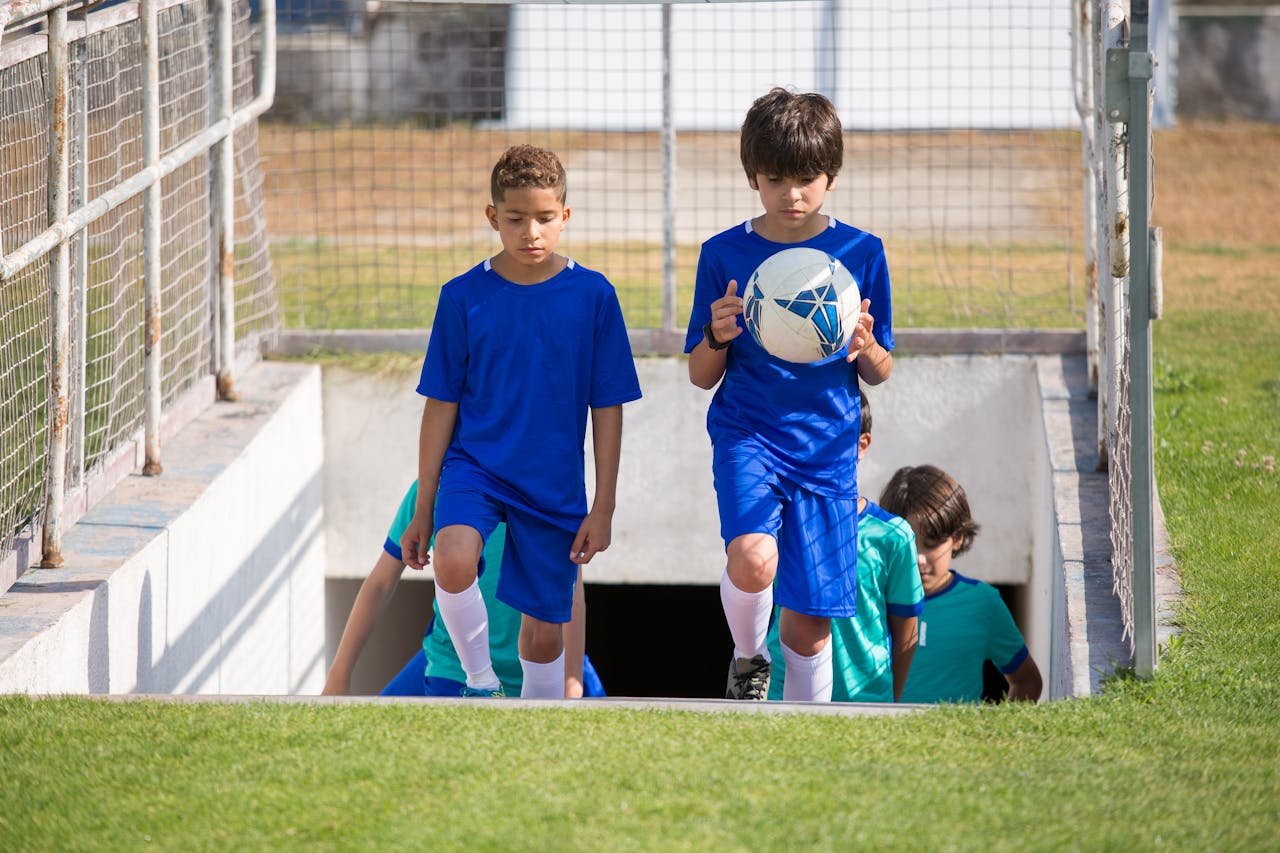

Kids lose interest fast when warm-ups feel like chores. Many young players go through the motions because the activities are dull or repetitive. That leads to slow starts, low energy, and sessions that take too long to get going. Coaches feel the pressure too, especially when they want to keep sessions fun without losing control of the group.
Soccer warm-up games kids actually enjoy can turn that whole experience around. When players start with something fun, they pay attention. They move more. They get into the session faster. And the best part? They learn without even noticing, because the games build coordination and technical habits in a natural way.
This article gives you warm-up ideas that are simple, engaging, and easy to run on any field. You will also learn how these games boost focus, improve movement quality, and help players get ready for real training. You don’t need fancy cones or special equipment. You just need games that match how kids think and play.
Kids learn faster when activities feel like play, not instruction. A warm-up that sparks curiosity can prepare them better than a long lecture ever could.
Soccer warm-up games kids actually enjoy for quick engagement
Early minutes of practice set the tone for the entire session. Kids arrive with different moods and energy levels. Some are excited. Some are tired from school. Others may be distracted. A strong warm-up quickly evens out those differences. That is why soccer warm-up games kids actually enjoy are so effective. They bring everyone onto the same page without force or pressure.
Games with simple rules work best because kids jump in right away. Long explanations slow everything down, and once you lose their focus, it’s hard to get it back. The goal is to get them active within seconds so their bodies wake up and their minds start working.
Why quick-start games matter
Quick-start warm-ups prevent kids from standing still. Standing creates boredom, and boredom spreads fast. When you pick games that start instantly, players stay engaged from the first whistle. That sets up better training rhythm later in the session.
These warm-ups sharpen balance, reaction time, spatial awareness, and footwork. But they also help in a different way: they build confidence. Kids who enjoy the start of training tend to take more risks and try more challenging drills later.
Soccer warm-up games kids actually enjoy that build physical readiness
Every good warm-up should move kids through basic physical phases—light movement, increased activity, and short bursts of speed. The games in this section match those phases while keeping the fun factor high. You don’t have to label the phases for the players. The games handle it for you.
Here are a few dynamic game styles that prepare young players without the stiffness of traditional drills.
Tag games with a soccer twist
Tag games may sound simple, yet they remain elite tools for youth sessions. The stop-and-go actions mirror actual match movements. Kids become fast on their feet without even thinking about “drills.” You can run these games with or without the ball depending on age and skill level.
These games help players warm up every major movement pattern: sprinting, turning, dodging, backpedaling, and accelerating again. They also break the social ice, which matters more than many coaches realize. When players laugh together early, they work better together later.
Helpful Hint:
Tag games work best when the field area is not too big. A smaller space pushes players to move with sharper reactions. If the area is too wide, faster kids dominate and slower players lose confidence. Adjust the size based on age and group energy.
Reaction-based warm-up games kids enjoy
Reaction games are perfect because they test players mentally and physically at the same time. Kids listen for signals, watch for visual cues, or track changes in movement patterns. These warm-ups build the quick decision-making they need during real matches.
They also improve focus in a way traditional jogging lines cannot. Players learn to prepare their bodies for sudden actions while staying alert to what happens around them.
Simple ball-control games to start the session
Ball-control warm-ups are great because every player wants touches. But you don’t need complex setups. Simple games with light pressure or small tasks can wake up their technique without overwhelming them. These games help build early confidence with both feet.
Kids enjoy touching the ball as soon as training starts. When a warm-up gives them that chance, they feel more connected to the session. And you don’t have to push them—they will move naturally.
Soccer warm-up games kids actually enjoy for coordination and agility
Coordination and agility are critical for young soccer players. Good warm-ups teach kids to move their feet, adjust their body, and react quickly without realizing it. Soccer warm-up games kids actually enjoy can make these improvements effortless because the exercises feel like play rather than practice.
Dribble relays and obstacle courses
Dribble relays challenge kids to move the ball under control through cones, markers, or natural obstacles. Adding a competitive element, like racing teams against each other, keeps engagement high. These games improve coordination, foot-eye skills, and quick thinking while keeping kids motivated.
Helpful Hint:
Keep obstacle courses short and manageable. Long courses can lead to fatigue and frustration. Aim for 20–30 seconds of continuous action per player, which is enough to challenge agility without losing focus.
Mirror movement games
Mirror games are simple yet effective. Pair players and have one leader perform movements while the partner mirrors them. Change roles frequently. These games develop coordination, spatial awareness, and reaction time. They also build observation skills—players must notice small cues to respond correctly.
Soccer warm-up games kids actually enjoy for teamwork and communication
Teamwork starts from the very first activity. Warm-ups that require collaboration encourage kids to talk, signal, and respond to each other naturally. These interactions carry over into actual matches and group drills.
Pass and move circle games
Create a circle and have players pass the ball around while moving. Introduce challenges like using only one touch or adding a “defender” in the middle. These games encourage quick thinking, teamwork, and communication while keeping the pace lively.
Mini-team challenges
Divide kids into small teams for short challenges. Example: Each team tries to keep the ball inside a small grid while moving. This fosters cooperation, decision-making, and fun competition. Kids stay engaged because the tasks are short and varied.
Stats:
According to a youth coaching study, children engaged in short, interactive warm-ups improved game participation by 35% compared to traditional jogging routines (Youth Sports Research Journal, 2021).
Soccer warm-up games kids actually enjoy for mental readiness
Mental readiness is often overlooked. Kids need to be alert and focused to get the most out of training. Soccer warm-up games kids actually enjoy can improve concentration, decision-making, and confidence. Games that mix movement with thinking challenges work best.
Simon says variations
Classic “Simon says” is a mental and physical warm-up. Add soccer-specific movements: dribble in place, sprint to a cone, or perform a short passing sequence. Kids listen carefully and react instantly. This improves focus and listening skills while keeping energy high.
Memory and movement games
Create short sequences of actions that kids must remember and repeat. For example, dribble to a cone, pass left, then perform a turn. Gradually add steps to increase difficulty. These games enhance memory, spatial awareness, and adaptability on the field.
Soccer warm-up games kids actually enjoy for confidence building
Confidence is as important as physical readiness. Kids who feel successful early in a session are more likely to take risks, try new skills, and stay engaged. Warm-up games that are achievable yet challenging create small victories that add up.
Mini-goals and point systems
Create small targets or point systems within warm-up games. For instance, dribble through a small gate to earn points. Keep scores low to emphasize fun and success rather than competition. Positive reinforcement helps children associate practice with accomplishment.
Encouragement-based partner games
Pair kids and have them complete tasks together, cheering each other on. Examples include short passing challenges or mini obstacle courses. The social support reinforces confidence and improves teamwork simultaneously.
Helpful Hint:
Rotate partners frequently so kids experience different levels of support and challenge. It prevents dominance by stronger players and encourages inclusion of all participants.
Planning warm-ups with variety in mind
Variety keeps sessions fresh and exciting. Kids quickly notice repetition, so cycling through different warm-up games ensures engagement. Rotate activities across sessions and mix physical, technical, and mental challenges. That way, every warm-up feels unique.
Creating a balanced warm-up plan
Start with quick-start movement games, move to skill-based activities, and finish with coordination, teamwork, or reaction challenges. This progression prepares kids physically and mentally while keeping the fun intact.
Adjusting difficulty for different age groups
Age and skill levels dictate the complexity of warm-ups. Younger players benefit from simple, straightforward games. Older kids can handle more challenging sequences with added technical or tactical elements. Adjust rules, space, and time to match developmental needs.
Equipment-light warm-up games
You don’t need a ton of gear. Soccer warm-up games kids actually enjoy can be done with minimal equipment. Cones, small goals, or even markers like shoes or bags work. Focus on creativity, not equipment quantity. Kids often enjoy improvisation and make the games their own.
Using the field creatively
Mark zones with cones or natural markers and assign tasks within those areas. For example, dribble to one zone, pass to a teammate in another. Spatial awareness improves, and kids stay active without feeling restricted by traditional setups.
Ball-focused warm-ups without extras
Even just one ball is enough. Passing sequences, dribbling challenges, or simple tag games with the ball can keep everyone busy. Minimalist approaches are easier to manage and more accessible for coaches running multiple age groups or limited resources.
Quick reaction and reflex warm-up games
Reflexes and quick decision-making are vital for soccer performance. Warm-up games that force kids to respond instantly build sharpness and reaction time. These activities also simulate match scenarios in a fun way.
Red light, green light with a soccer twist
Players dribble toward a finish line while you call “green light” to move and “red light” to stop. Add variations like “yellow light” to dribble slowly or “turn” to spin with the ball. These games improve ball control, agility, and alertness.
Reaction cone challenges
Place cones in random patterns. Call out a color or number, and kids run/dribble to the corresponding cone. This encourages quick thinking, awareness, and precise movement under pressure. Kids enjoy the unpredictability and excitement of reacting correctly.
Helpful Hint:
Start slow to ensure understanding. Gradually increase speed and complexity as kids gain confidence in responding accurately. This prevents frustration and helps maintain focus on learning proper movement patterns.
Integrating small-sided games into warm-ups
Small-sided games are an excellent way to combine warm-up exercises with fun, competitive play. They increase touches on the ball, provide realistic game situations, and allow kids to practice decision-making under pressure.
3v3 or 4v4 mini-games
Use small goals or target zones for scoring. Keep the games short, 3–5 minutes, and rotate teams frequently. This ensures everyone stays active, maximizes touches, and encourages cooperation. Kids naturally develop passing, dribbling, and spatial awareness skills.
Conditioned games with specific focus
Design mini-games with constraints such as “two-touch maximum” or “must pass before scoring.” These rules add purpose to warm-ups while keeping them engaging. Kids enjoy the challenge without feeling like they’re doing drills.
Stats:
A study of youth soccer programs found that teams using small-sided warm-up games increased effective touches per player by 28% compared to traditional warm-up routines (Journal of Sports Coaching, 2020).
Mixing physical, technical, and fun elements
The best warm-up games for kids combine movement, skill practice, and enjoyment. This keeps energy high and players mentally engaged. Variety prevents boredom and builds multiple soccer competencies simultaneously.
Dynamic tag games with a ball
Tag games can be adapted with soccer balls. Players must dribble while avoiding being tagged. If tagged, they perform a quick technical skill like juggling or passing to rejoin. This encourages control, agility, and friendly competition.
Skill circuits with competitive elements
Set up short stations for passing, dribbling, or shooting. Include time challenges or races. Rotate kids every 30–60 seconds. This ensures everyone stays active, experiences multiple skills, and maintains engagement. Incorporating friendly competition motivates effort without pressure.
Keeping warm-up games simple and fun
Simplicity is key. Soccer warm-up games kids actually enjoy should be easy to explain and implement. Kids respond best when they understand what to do quickly and can start playing immediately. Overcomplicated rules reduce enjoyment and focus.
Limit instructions, focus on demonstration
Show rather than explain whenever possible. A quick demo allows kids to see expected movements and reduces confusion. Kids imitate visually and grasp concepts faster than long verbal explanations.
Use positive reinforcement
Praise effort, creativity, and teamwork throughout the warm-up. Encourage kids to support each other. Positive reinforcement boosts confidence, maintains high energy levels, and fosters a positive attitude toward learning and practice.
Helpful Hint:
Rotate warm-up games every session to prevent monotony. Even small changes, like different cone arrangements or dribbling patterns, make familiar games feel fresh and exciting for children.
Adapting warm-up games for different group sizes
Group size affects how you structure warm-ups. Soccer warm-up games kids actually enjoy must scale to accommodate small or large groups. Adjusting space, rules, and team sizes ensures everyone stays active and engaged.
Small groups
Use mini-games, relays, or paired exercises. Small groups allow more touches and attention from coaches. Kids benefit from individualized guidance while staying challenged and motivated.
Large groups
Divide players into stations or multiple mini-games simultaneously. Use larger spaces or multiple balls to prevent crowding. Assign leaders or rotate teams to maintain organization and participation. Kids stay active and avoid downtime.
Soccer warm-up games kids actually enjoy summary
Effective warm-ups improve physical readiness, skill development, and mental focus. By making the games enjoyable, children develop a love for practice and soccer. Combining coordination, teamwork, confidence-building, and quick reaction games creates a balanced approach to preparing young players for training sessions and matches.
- Dribble relays and obstacle courses enhance coordination and ball control.
- Mirror and circle games improve teamwork, communication, and observation skills.
- Reaction and memory games sharpen focus and mental readiness.
- Mini-goals and point systems foster confidence and success.
- Small-sided and dynamic games keep engagement high while building essential soccer skills.
Wrapping Up
Soccer warm-up games kids actually enjoy are essential for building energy, focus, and skill before training or matches. Simple, engaging activities help children develop coordination, teamwork, and confidence while keeping practice fun. Incorporating a variety of games, from dribble relays to reaction challenges, ensures players stay motivated and improve important soccer skills naturally.
By combining physical movement, technical drills, and playful competition, coaches and parents can create warm-ups that are effective and enjoyable. Tailoring games to group size, skill level, and age allows all players to participate fully and benefit from each session. Consistent, fun warm-ups establish a positive atmosphere and help young athletes look forward to practice.
Ultimately, prioritizing fun alongside development encourages kids to stay active, build soccer fundamentals, and develop a lasting passion for the game. Experiment with different warm-up games, keep them short and dynamic, and watch players improve both their skills and enthusiasm on the field.