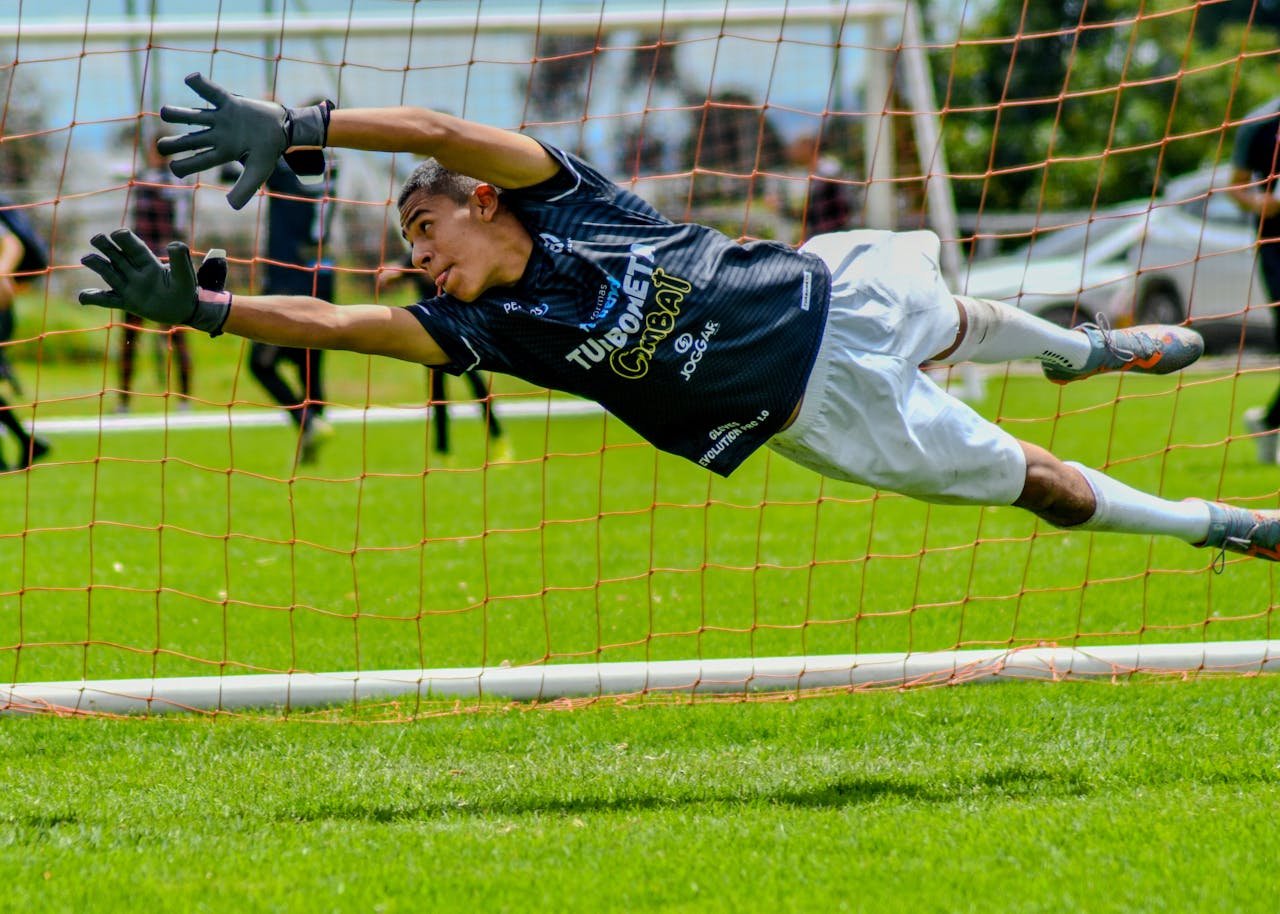

Beginner goalkeeping basics matter more than most new players realize. A lot of new keepers step into the position without clear guidance, and that creates frustration fast. The role looks simple from the outside, but the reality is different. A keeper has to read the game, control the box, react under pressure, and stay focused even when the ball is far away.
The problem many beginners face is that they don’t know where to start. They worry about getting scored on. They freeze during one-on-one plays. They stand flat-footed on shots and have no idea how to position their hands or feet. It’s easy to feel lost when you’ve never been taught the basics.
That’s where this guide comes in. The goal is simple: break down beginner goalkeeping basics into clear, practical steps that any new keeper can understand. No complicated jargon. No unrealistic instructions. Just the essential techniques and habits that help new keepers feel more confident the next time they step in front of the net.
Good goalkeeping isn’t about being fearless. It’s about learning the simple habits that make everything feel a little less chaotic.
How Beginner Goalkeeping Basics Shape a New Keeper’s Foundation
Beginner goalkeeping basics give new players the structure they need to grow. Without guidance, keepers often rely on instinct alone, and that leads to bad habits that are hard to fix later. Basic positioning, simple footwork patterns, and proper catching technique give young goalkeepers the foundation they need to stay balanced and ready.
Many new keepers think athleticism is the main requirement. Speed helps, but technique matters more. A well-positioned goalkeeper makes more saves than a fast but unprepared one. The basics teach players how to move with control, how to read incoming shots, and how to protect the goal without panicking.
This early stage is also where confidence starts to build. When keepers understand where to stand, how to angle their body, and how to react to different plays, they start to trust themselves. That confidence changes everything—from how they communicate with defenders to how they handle pressure during games.
Helpful Hint:
Beginners often feel pressured to look “perfect” right away. Instead of chasing perfection, focus on consistency. Simple improvements repeated often make a far bigger difference than rare highlight saves.
Beginner Goalkeeping Basics and the Ready Stance
The ready stance is one of the most important beginner goalkeeping basics. It looks simple, but this position controls how quickly a keeper can react to a shot. The stance keeps a goalkeeper light on their feet, balanced, and prepared for anything coming toward the goal.
Many new keepers stand too tall or lean back because it feels natural. The problem is that this slows reactions. A proper ready stance puts the keeper in a forward-leaning athletic position. The weight shifts slightly to the balls of the feet. The knees stay bent. The hands sit in front of the body, ready to move toward the ball instead of hanging by the sides.
Think of the ready stance as the goalkeeper’s “home base.” Every movement starts here. Whether it’s a dive, jump, or quick shuffle, the keeper returns to the stance after every action. Learning this early helps prevent wasted movement and makes every reaction smoother.
How Should Hands Be Positioned?
Beginner keepers often struggle with hand placement. If hands are too low, high shots become difficult. If they’re too high, low shots slip through. A neutral hand position fixes this. The hands should sit around waist or chest height, slightly forward, with palms facing the ball. This position allows the keeper to reach up, down, or sideways without losing time.
A simple rule: hands should always be visible in the keeper’s peripheral vision. If the goalkeeper can’t see their hands at the edges of their view, the hands are too low or too far back.
Why Foot Position Matters
Good foot placement helps the keeper stay stable and balanced. Feet should be shoulder-width apart with toes pointed slightly forward. A narrow stance makes the keeper easy to push off balance. A wide stance makes movement slow. The middle ground gives the goalkeeper the best combination of stability and speed.
Beginner keepers should avoid locking their knees. Bent knees help the body shift weight quickly, which is crucial for reacting to shots. A stiff stance leads to late reactions and awkward dives.
Helpful Hint:
Keepers should practice their ready stance in front of a mirror for a few minutes each day. It may feel strange at first, but seeing their posture helps them improve faster. The stance should become second nature, even when the keeper is tired or stressed.
Beginner Goalkeeping Basics and Simple Footwork Patterns
Footwork separates good keepers from struggling ones. Many new goalkeepers focus only on diving or catching. But most saves start with small, controlled steps. Beginner goalkeeping basics emphasize footwork because poor movement leads to bad angles and slow reactions.
The key is to move efficiently. A keeper should never cross their feet when moving sideways. Shuffling keeps the body square to the ball and prevents slips. The body should stay level, not bouncing up and down. Smooth movement creates quicker responses and less wasted energy.
Another common issue is stepping backward. Beginners often backpedal instead of adjusting with lateral steps. Backpedaling weakens balance and creates dangerous gaps. Instead, keepers should pivot, shuffle, or take small forward steps to reset their angle.
What Footwork Drills Help New Keepers Most?
Simple drills work best for beginners. One basic drill involves small side shuffles between two cones placed a few meters apart. The keeper should stay low and keep hands ready. Another drill is forward and backward steps, staying in the ready stance the entire time while keeping the shoulders square to the imaginary ball.
Another helpful drill is the “triangle footwork pattern.” Three markers are placed on the ground. The keeper moves between them using short steps, always returning to the ready stance. This builds coordination and improves balance under pressure.
Why the First Step Matters
The first step toward the ball is often the difference between a save and a goal. Many beginners take a large step that pulls them off balance. Instead, goalkeepers should take a small, controlled first step. This keeps the body centered, making it easier to react to the shot.
A keeper who masters the first step gains a huge advantage. It helps on crosses, long shots, rebounds, and quick one-on-one situations. Small, steady steps keep the body positioned properly and reduce the chance of overcommitting.
A goalkeeper who moves well makes hard saves look routine. A goalkeeper who moves poorly makes routine saves look hard.
Beginner Goalkeeping Basics and Ball Handling Skills
Handling the ball is one of the core beginner goalkeeping basics that every new keeper must learn. It’s not just about catching. It’s about controlling the ball in a way that feels safe, calm, and predictable. A keeper with solid handling skills gives confidence to the entire team. When beginners struggle with handling, the back line often plays nervously. Strong handling reassures everyone.
Most mistakes come from stiff hands, poor timing, or standing flat-footed. When a keeper keeps the hands relaxed and ready, the ball settles more naturally. Tension makes catching harder. Relaxed hands absorb the shot better, like cushions instead of walls.
Beginners also tend to stand straight-legged when preparing for a catch. This slows down the reaction and removes power from the movement. Staying in the ready stance helps the keeper move toward the ball instead of waiting for the ball to come to them.
How Should Beginners Catch Low Shots?
Low shots cause the most trouble for new keepers. Many beginners bend at the waist instead of lowering their entire body. This creates unstable posture and increases the chance the ball slips through. The proper method is to drop into a low, balanced position and scoop the ball using the “W” or “basket” technique.
The basket catch brings the forearms close together to form a natural cradle. The keeper leans slightly forward with knees bent, allowing the ball to fall safely into the arms instead of bouncing off the hands.
The key is getting the body behind the ball. If the ball slips through, it should still bounce off the chest or legs and stay in front of the keeper. This prevents dangerous rebounds and tap-in goals.
What About Medium and High Shots?
Medium-height shots are the most comfortable for beginners. The hands form a “W” shape behind the ball. The thumbs stay close, and the fingers spread wide. This allows the hands to curve around the ball instead of smacking it awkwardly.
For high shots, beginners should avoid letting the ball drop below their chest before catching it. Catching the ball early gives the keeper more control. It also prevents the ball from bouncing off the palms. Keeping the elbows slightly bent helps absorb impact and reduces the sting of hard shots.
Why Soft Hands Matter
Soft hands are essential in goalkeeping. They don’t mean weak hands. They mean responsive hands that adjust to the shot. A keeper with soft hands guides the ball into control. This prevents rebounds and builds confidence.
Beginners can practice soft hands by tossing a ball gently to themselves. The goal is to absorb the ball each time. The movement should feel smooth, like catching an egg without cracking it.
Helpful Hint:
If new keepers struggle with grip, have them wear damp gloves during training. The added moisture makes the ball feel more slippery. It forces proper technique because they can’t rely on stickiness alone. When they switch back to dry gloves during matches, handling feels more controlled and secure.
Beginner Goalkeeping Basics and Catching Fundamentals
Catching fundamentals shape how confident a keeper becomes under pressure. The technique stays the same whether the ball comes fast or slow. Beginners often panic when the ball travels quickly, but good fundamentals keep everything under control.
The most important principle is keeping the eyes locked on the ball. Many new keepers look away right before contact, either out of fear or habit. When eyes stay on the ball from the moment the shot leaves the foot, timing improves dramatically.
Another key concept is stepping toward the ball. A slight forward step gives more control and reduces rebounds. Standing still increases the odds of the ball bouncing out of the keeper’s hands.
How Close Should the Arms Be?
Beginners often catch the ball with arms stretched too far forward. This creates a stiff, uncomfortable movement. The keeper should bend the elbows slightly. This creates a natural cushion that softens the catch. Tight, stiff arms increase the chance of drops.
Keeping the elbows tucked closer to the body also helps protect the ball when attackers run in for rebounds. It prevents them from knocking the ball loose.
Why Angling the Hands Helps
Hand angles guide where the ball ends up. A keeper should angle their hands slightly toward each other for medium shots. For low shots, the hands angle upward. For high shots, they angle backward slightly to secure the ball. These angles seem small, but they change everything about control.
Angling the hands correctly cuts down on bobbles. Bobbles create nervous moments and give attackers easy chances. Clean catches make the keeper look calm and experienced.
Do Beginners Need Special Drills?
Simple passing and catching drills work wonders. Having a partner toss balls at different speeds and heights helps beginners understand timing. Another drill involves catching a ball thrown off a wall. This creates unpredictable rebounds that force fast reactions.
Repetition matters more than power. Catching 50 gentle balls in good form builds stronger habits than catching 10 hard shots with shaky technique.
Stats:
A study by the Journal of Sports Sciences found that over 70% of beginner goalkeeper mistakes stem from poor hand positioning and reaction timing. This highlights why catching fundamentals matter more than diving early on. (Source: Journal of Sports Sciences)
Stop Comparing Players — Build Individual Confidence
Comparison is one of the fastest ways to kill a young player’s confidence. Kids naturally compare themselves, but hearing adults compare them makes insecurities much stronger.
What Coaches & Parents Should Do Instead:
- Highlight individual progress.
- Focus on each player’s unique strengths.
- Avoid comparing siblings, teammates, or friends.
- Reinforce that everyone has their own development timeline.
Young players flourish when they know their value isn’t measured against others.
Avoid Overcoaching — Let Kids Play More Freely
Overcoaching creates fear of mistakes, which destroys confidence. Kids stop trusting themselves when every action is corrected.
How to Fix It:
- Let them play without constant instructions.
- Allow them to make their own decisions.
- Save most corrections for breaks, not during play.
- Encourage creativity over perfection.
Confidence grows when players feel freedom, not fear.
Use Positive, Future-Focused Language
Words matter deeply to young athletes. Negative phrases stay in their minds and harm confidence.
Use phrases like:
- Next time, try…
- I like the idea — let’s adjust it.
- You’re learning — keep going.
Positive language builds long-lasting confidence.
Teach Mental Reset Skills
Mistakes snowball when kids don’t know how to mentally reset. Teach simple tools that help them move on quickly.
- Shirt Grab Reset: Quick symbolic “fresh start.”
- One Breath Rule: Deep inhale and exhale.
- Three-Word Mantra: Examples: “Next ball, win,” “I’ve got this,” “Strong and calm.”
Build Confidence Through Leadership Opportunities
Confidence grows when kids feel trusted. Give them small leadership roles:
- Warm-up leader
- Team huddle captain
- Equipment helper
- Partner drill leader
Even shy players bloom when given responsibility.
Celebrate Hustle and Attitude — Not Just Results
Only praising goals and wins creates outcome-based confidence. Instead, praise effort, teamwork, and resilience.
- Effort
- Movement off the ball
- Teamwork
- Positive attitude
- Grit
This builds identity-based confidence that lasts.
Encourage Healthy Risk-Taking
Players who never take risks stay stuck and fearful. Reward the attempt, not only the success.
- Encourage dribbles
- Support creative passes
- Praise shooting attempts
A bold player becomes a confident player.
Understand That Confidence Isn’t Linear
Confidence naturally goes up and down for young athletes due to growth, school stress, changes in the team, and many other factors.
Your consistency helps stabilize them.
Model Confidence Yourself
Kids copy the adults around them. If adults show calmness, positivity, and emotional control, players feel secure and confident.
The most powerful confidence-building tool is your own behavior.
Wrapping Up
Helping kids grow into confident players takes patience, consistency, and a clear understanding of what they need from the adults guiding them. When coaches and parents work together with a steady, supportive approach, young athletes develop the mindset that allows them to learn, push themselves, and handle challenges with greater belief in their abilities.
This guide on how to build soccer confidence in young players highlights one core truth: confidence is shaped by environments, not luck. Kids thrive when they feel safe to try new things, make mistakes, and improve at their own pace. They gain strength through positive reinforcement, simple routines that reduce pressure, and training that focuses on growth instead of outcomes.
Whether you’re coaching a full team or supporting your own child, your influence carries weight. Every small moment—your tone, your feedback, your patience—helps form their long-term relationship with the sport. By applying the strategies in this guide, you’re not just helping them play better; you’re building the foundation that keeps them motivated and excited to continue learning.
If you found this helpful and want to explore more ways to support young athletes, stay connected with the site for future guides, practical tips, and deeper insights into youth soccer development. Your effort can make the game a place where every player feels capable, valued, and ready for the next challenge.